
Electric Mobility Canada’s statement on the federal auto strategy announcement
February 5, 2026
EMC acknowledges today’s federal announcement outlining new measures to transform Canada’s auto manufacturing sector. While we are disappointed by the decision to discontinue the Electric Vehicle Availability Standard (EVAS), a policy designed to ensure all Canadians have access a predictable supply of zeroemission vehicles, we welcome several important elements of the government’s plan.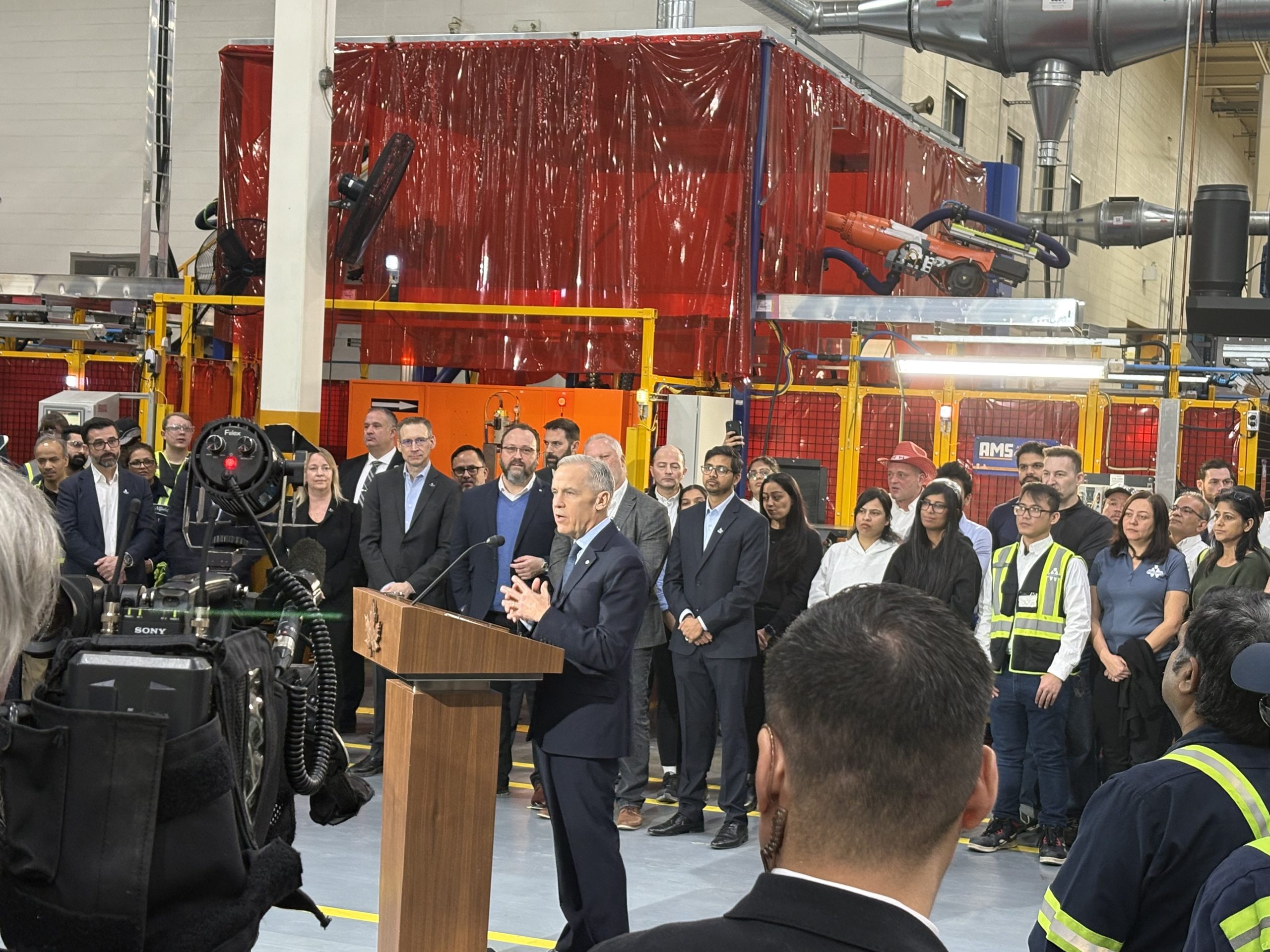
Electric Mobility Canada (EMC) acknowledges today’s federal announcement outlining new measures to transform Canada’s auto manufacturing sector. While we are disappointed by the decision to discontinue the Electric Vehicle Availability Standard (EVAS), a policy designed to ensure all Canadians have access a predictable supply of zeroemission vehicles, we welcome several important elements of the government’s plan.
We are cautiously optimistic about the direction of the forthcoming sovereign GHG emissions regulations and the government’s commitment to reaching the equivalent of 75% zeroemission vehicle sales by 2035 and 90% zero-emission vehicle sales by 2040. “It’s very important that we accomplish these targets through a long-term commitment of at least 10 years through a fleet GHG emission regulation standard as opposed to a vehicle GHG regulation standard” states Daniel Breton, President & CEO of EMC. Strong, enforceable GHG standards are essential to reducing transportation emissions, and we look forward to contributing to the development of a policy that will deliver real progress.
We applaud the government’s continued investments in charging infrastructure, which are critical to accelerating adoption and giving Canadians confidence that an EV can meet their driving needs.
We welcome the reintroduction of a federal ZEV purchase incentive, but the announced $50,000 final transaction value cap is too restrictive and risks excluding many vehicles Canadians need, particularly for families, rural residents, and tradespeople who need larger vehicles. Although we are pleased that this incentive will be available to Canadians starting February 16th, 2026, by focusing incentives on smaller vehicles only, the policy limits emissions reduction potential and may undermine Canada’s GHG reduction goals.
We are encouraged that the government’s approach to supporting investment seems to extend beyond vehicle assembly to the broader automotive and electric mobility supply chain, including parts manufacturing, batteries, charging infrastructure, critical minerals, and enabling technologies. Measures such as the proposed evolution of the automotive tariff remission framework appear to recognize the importance of the full ecosystem required to deliver electrification at scale.
EMC will continue to work with the federal government to strengthen these measures and ensure Canada stays on track toward a cleaner, more competitive transportation future.


Photos: (Left to Right) Prime Minister Mark Carney announcing new measures for Canada’s auto industry; EMC COO Maureen Shuell with Minister of Environment and Climate Change, Julie Dabrusin; Maureen Shuell with Dominique O’Rourke, Chair of the Liberal Auto Caucus
Download the PDF